
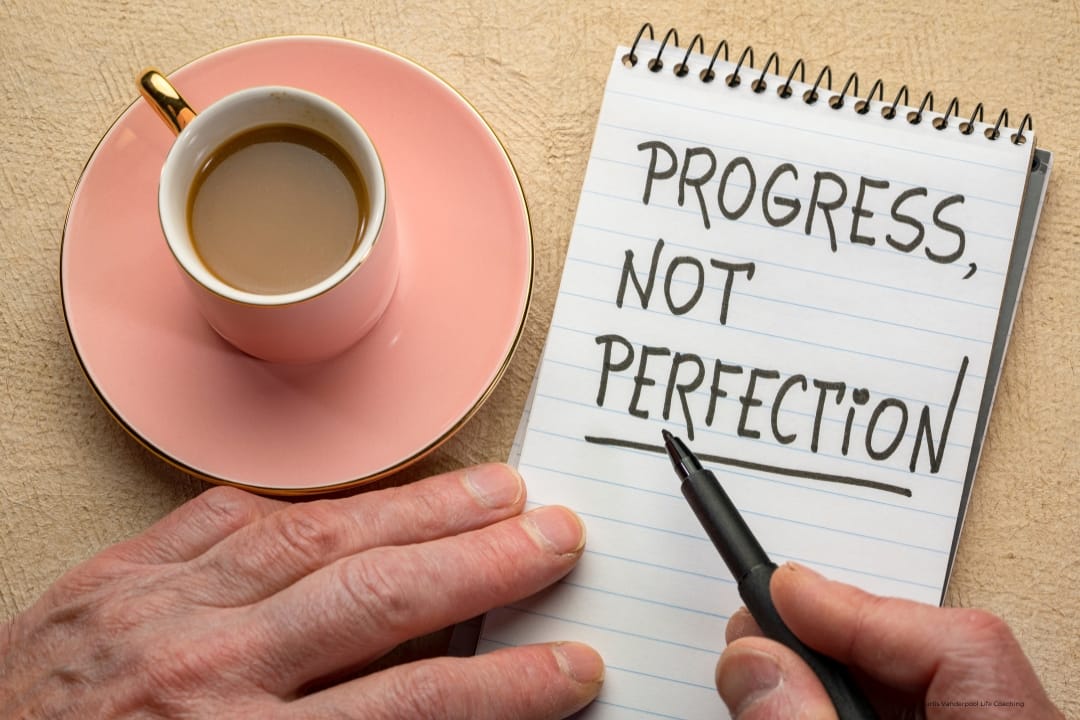
You’ve probably asked yourself some version of this question:
“What do I need to do to be successful in college?”
Maybe the answer seems obvious. Get good grades. Choose the right major. Make friends. Land an internship. Graduate on time.
No pressure, right?
College students often feel like they should arrive on campus knowing what to study, what career they want, how to manage their time, and how to balance everything else in their lives.
But here’s the truth: the most important thing to know in college is that you don’t have to know everything.
In fact, learning how to be successful in college has much less to do with having all the answers and much more to do with becoming the kind of person who is willing to learn.
When students ask how to be successful in college, they are often looking for the perfect schedule, study strategy, or step-by-step plan. Those things can help, but none of them matter as much as staying willing to learn when the plan stops working.
College Is a Place to Learn, Not a Test of Whether You Already Know Enough
That sounds obvious when we’re talking about chemistry, history, or calculus. Of course you go to class because you don’t already know the material.
But somehow, we don’t give ourselves the same permission in the rest of college life.
We feel embarrassed when we don’t know how to study effectively. We judge ourselves when we struggle to make friends. We panic when we question our major. We assume everyone else understands how office hours work, internships, and life on their own.
You are not supposed to know how to do something you have never learned to do.
You are allowed to be a beginner.
Being a beginner doesn’t mean you are behind. It means you are where growth begins. Learning how to be successful in college starts with being willing to ask questions, try something new, look a little awkward, and learn as they go.
The Pressure to Have It All Together

This pressure builds from social media, family expectations, grades, competition, and other people’s highlight reels.
Your roommate seems to have a huge friend group by the second week of school. Someone in your class already has two internships on their résumé. Your friend calls home to announce a 4.0 while you’re trying to figure out whether you can still pass biology.
It can start to feel like everyone else is moving forward while you are falling behind.
But appearances are not the whole story. The confident student may be terrified of disappointing their parents. The person with the perfect résumé may have no idea what they actually want. The friend posting from every event may still feel lonely.
Trying to look like you have everything together creates a kind of pressure that eventually becomes too heavy to carry. You stop asking for help because you think you shouldn’t need it. You avoid trying unfamiliar things because you might not be good at them. You begin treating every mistake as proof that you don’t belong.
That isn’t how to be successful in college. That’s how students end up exhausted, anxious, and afraid to take the very risks that would help them grow.
Failure Is Information, Not an Identity
Let’s say you fail an exam.
Your first thought might be, “I’m stupid,” “I’m not cut out for this major,” or “I always mess everything up.”
Notice what happened there. One disappointing grade became a statement about who you are.
That kind of self-talk makes failure feel permanent. If the problem is that you are stupid, lazy, or incapable, what can you do about it?
But what if the grade is information instead?
Maybe your studying didn’t match the test. Maybe you started too late, needed more practice, or were afraid to ask for help.
None of those answers require self-deprecation. They require curiosity.
You can ask, “What happened? What can I learn from it? What will I try differently next time?”
That doesn’t mean failure feels good. A learner mindset isn’t pretending everything is positive. It’s deciding that a setback will teach you something instead of getting the final word about you. Research on growth mindset supports this approach, showing that students can learn to respond to challenges with greater persistence and more constructive strategies.
Learning how to be successful in college means replacing “What is wrong with me?” with “What is this showing me?”
The Students Who Succeed Aren’t Always the Ones Who Start Ahead

Some students arrive with great study habits, strong support systems, clear goals, and experience advocating for themselves. Others arrive without any of that.
Starting ahead is helpful, but it doesn’t guarantee where someone will finish.
Over time, the ability to keep learning matters more than looking impressive at the beginning. Students who ask for feedback improve. Students who adjust their systems become consistent. Students who try again after rejection build confidence.
That’s what growth often looks like. It isn’t one dramatic transformation. It is a lot of small adjustments that compound over time.
The student who seems lost in the first semester may become a leader by senior year, not because they suddenly found all the answers, but because they kept learning.
How to Build a Learner Mindset in College
If you want a more useful answer for how to be successful in college, start with these habits:
1. Ask questions before you feel completely stuck.
Talk to the professor, teaching assistant, advisor, tutor, supervisor, or friend. Asking for help is not evidence that you can’t do it. It is one of the ways you learn to do it.
2. Separate your results from your identity.
You failed a test; you are not a failure. You made an awkward first impression; you are not socially hopeless. Describe what happened accurately without turning it into a verdict about your worth.
3. Treat feedback like useful data.
Feedback can sting. Give yourself time to feel that, then look for what you can use. You don’t have to agree with every opinion to learn something from it.
4. Try small experiments.
Test a new study routine. Attend one club meeting. Go to office hours. Apply for one position. You don’t need a perfect plan before taking the next step.
5. Review what works instead of only noticing what went wrong.
Ask yourself: What helped this week? When did I feel focused? What made a hard task easier? Growth comes from repeating what works as much as fixing what doesn’t. These study skills for college freshmen can also help you experiment with practical habits and find an approach that works for you.
6. Measure progress over time.
Don’t compare your beginning to someone else’s middle. Look back a month or a semester. Are you asking better questions, recovering faster, or becoming more consistent? That counts.
This is how to be successful in college without making perfection the price of feeling good about yourself.
You Don’t Need a Perfect College Experience
There will probably be a class you dislike, a friendship that changes, an opportunity you don’t get, or a semester that does not go according to plan.
Your job is not to eliminate every setback. Your job is to become someone who can respond to setbacks with honesty, curiosity, and courage.
Learning how to be successful in college is bigger than producing a flawless transcript or résumé. It is learning how you work, what matters to you, how you relate to people, and how to keep growing without clear instructions.
You don’t need to leave college knowing everything. You need to leave knowing that you can learn.
What to Do If the Pressure Is Already Too Much

Sometimes students understand this logically but still struggle to live it. One disappointing grade or awkward week can become a spiral of self-doubt.
That’s where life coaching for college can help.
As a college instructor and life coach who has worked with hundreds of college students, I help students take the pressure off, build confidence, create useful systems, and keep moving forward.
If you’re trying to figure out how to be successful in college without feeling like you have to be perfect, let’s talk.
Book a free consultation today, and let’s figure out what would help you learn, grow, and feel more confident this semester.
Final Thought
The most successful person in the room is not always the one who walked in with the most talent, confidence, or experience.
Often, it is the person who stayed teachable.
So ask the question. Try the thing. Learn from the bad grade. Adjust the plan. Let yourself be new at something.
That may not be the easiest answer to how to be successful in college, but it is the one that will continue serving you long after graduation.
You do not have to prove that you already have all the answers. The most important thing to know in college is that you are capable of learning what comes next.




0 Comments